






How to Rent an Apartment in Dubai: The Full Process, Ejari and DEWA Explained
Every step of renting in Dubai, from searching and cheques to Ejari, DEWA, rent increase rules and getting your deposit back.
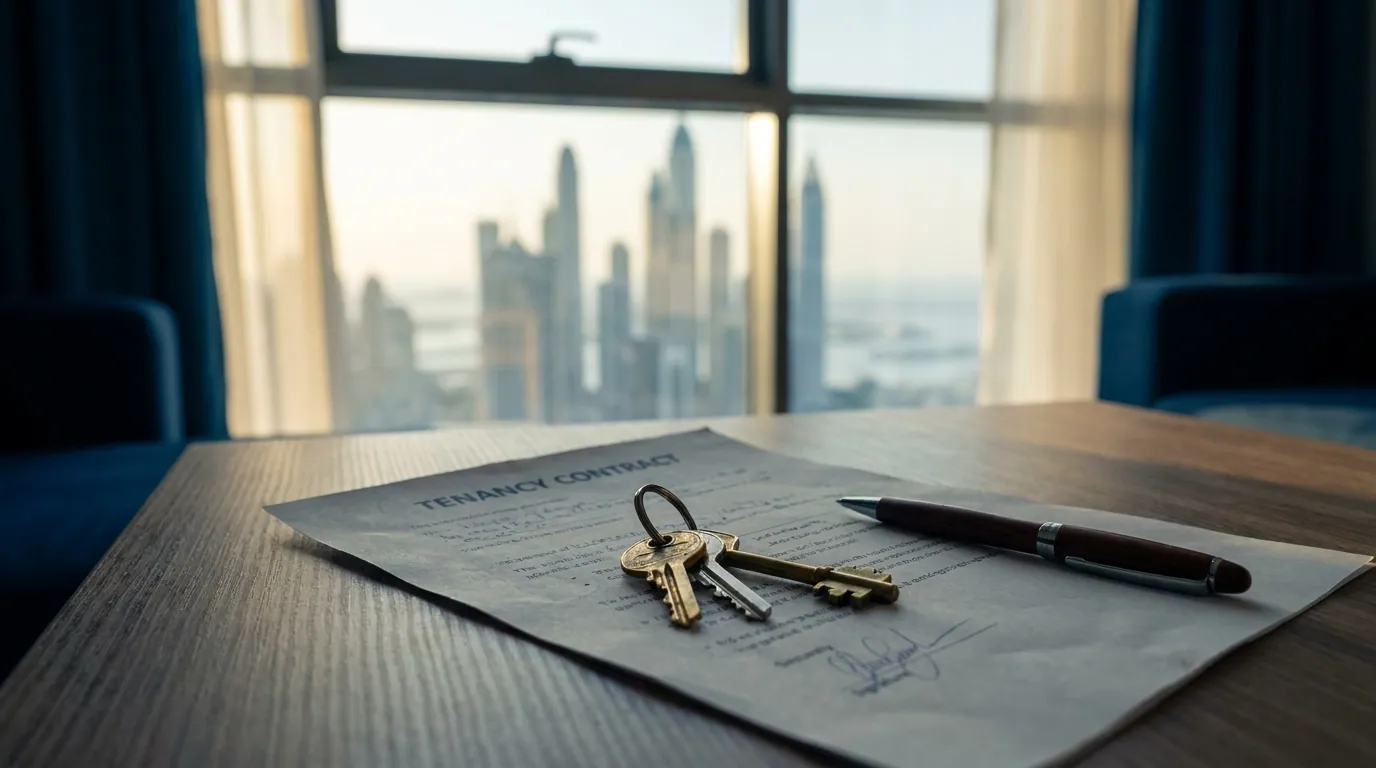
Renting in Dubai is straightforward once you know the order of events. You find a property through a licensed agent, agree the terms, pay a deposit, commission and the first cheque, register the tenancy contract on Ejari, and then connect your electricity and water with DEWA. Most of the rules are set by the Dubai Land Department (DLD) and its regulator, RERA, and they protect tenants well if you follow the process.
This guide walks through each step in the order you will meet it, with the costs to expect as of 2026.
Step 1: Decide your budget and area
A common rule of thumb is to keep annual rent at roughly a third of your gross income, though many residents spend more in prime areas. Remember that rent is only part of the cost. Add the agent fee, deposit, Ejari, DEWA, internet and, in some communities, district cooling.
Use the cost of living tool to see how a rent figure fits against your wider budget, and read the renting a home guide for the national picture. If you are still choosing a neighbourhood, our Dubai emirate page gives a quick overview.
Step 2: Search and view
Properties are listed on the major portals and through agencies. Two checks protect you from the start:
- Use a RERA-registered agent. Legitimate advertisements carry a permit number (Trakheesi) and the agent has a registered broker number (BRN). Ask to see the agent's RERA card.
- Confirm the landlord owns the property. Ask to see the title deed, or have the agent show it. The landlord (or an attorney with a valid power of attorney) must sign the contract.
When you view a flat, check water pressure, air conditioning, the condition of the kitchen and bathrooms, windows, and any signs of damp. Ask what the building charges in service fees, whether parking is included, and whether cooling is included in the rent or billed separately by a district cooling provider.
Step 3: Negotiate
Everything is negotiable, but your leverage depends on the market, the season and the unit. Useful points to raise:
- The annual rent, especially if the unit has been listed for a while.
- The number of cheques. More cheques mean smaller payments and easier cash flow.
- Repairs or painting before you move in, written into the contract.
- Whether the landlord will cover or share the agency fee.
Get every agreed point in writing before you pay anything.
Step 4: Understand the cheques
Dubai rents are usually paid in post-dated cheques. Landlords commonly offer one to four cheques a year, and tenants can sometimes negotiate more. Paying in one cheque often earns a discount. Two to four cheques are the norm.
Every cheque must be backed by funds on its date. Keep the dates in a calendar. A bounced cheque can lead to legal action under UAE law and can damage your standing with the landlord, so never sign more cheques than you can cover.
Step 5: Know the upfront costs
Before you receive the keys, expect to pay the following. Figures are typical, not fixed.
| Item | Typical amount |
|---|---|
| Security deposit | 5% of annual rent (unfurnished), 10% (furnished) |
| Agency commission | Typically 5% of annual rent, paid by the tenant |
| Ejari registration | A fixed fee of a few hundred dirhams |
| DEWA deposit | AED 2,000 for an apartment, AED 4,000 for a villa, plus a small connection fee |
| First rent cheque | Depends on the number of cheques agreed |
The security deposit is refundable. It is held by the landlord, not the agent, and it is usually returned by cheque or transfer after you move out. The 5% and 10% figures are market custom rather than fixed by law, so they can occasionally be negotiated.
The commission is the agent's fee for finding the property. Five percent of the annual rent is the usual figure for the tenant. Ask for the exact amount and get a receipt.
Step 6: Sign the tenancy contract and register Ejari
The tenancy contract sets out the rent, duration, cheque schedule, notice periods, and who is responsible for maintenance. Read it fully before signing. Typical documents you will need:
- Passport and Emirates ID (or the passport and visa page if your ID is pending)
- A copy of the landlord's passport and the title deed
- Your cheques and payment for deposit and commission
Ejari means "my rent" in Arabic. It is the official online registration of the tenancy contract with DLD, required by Dubai law. You cannot get DEWA connected, sponsor family members or take disputes to the rental court without it. Agents and registered typing centres usually complete Ejari within a day, and you can also do it through the DLD website or the Dubai REST app. You will receive an Ejari certificate. Keep it, because it proves your address.
DLD's official site is dubailand.gov.ae.
Step 7: Connect DEWA
The Dubai Electricity and Water Authority (DEWA) supplies both electricity and water. Open an account online through the DEWA website or app with your Emirates ID, Ejari certificate and the premises number. You pay a refundable security deposit and a connection fee, and DEWA activates the meter.
Your DEWA bill also carries the Dubai Municipality housing fee, which is 5% of annual rent, split across the year. It is a government charge, not a landlord charge. If your building uses district cooling, you open a separate account with the cooling provider, which often has its own deposit.
Use the DEWA bill estimator to forecast your monthly bill, especially for summer when air conditioning pushes usage up. The provider's own site is dewa.gov.ae.
Step 8: Check the building and move in
Before moving your furniture, do a written snag list with the landlord or agent. Photograph every existing mark, scratch and fault, and date the photos. This protects your deposit later. Ask the building management about move-in rules, which often require a deposit, a booking slot and a lift permit.
If you are moving from overseas, our moving to the UAE checklist covers the other tasks to complete in your first weeks.
Rent increases and the RERA rent calculator
Landlords cannot raise rent whenever they like. Dubai sets rules through RERA, and the RERA rental index calculator on the DLD website tells you the permitted increase. In outline, the calculation compares your current rent with the average market rent for a similar unit in the same area:
- If your rent is up to 10% below the average, no increase is allowed.
- If it is 11% to 20% below, the maximum increase is 5%.
- If it is 21% to 30% below, the maximum is 10%.
- If it is 31% to 40% below, the maximum is 15%.
- If it is more than 40% below, the maximum is 20%.
Landlords must give written notice of any rent increase or change in terms at least 90 days before the contract expires. If they do not, the increase generally cannot be enforced for the new term. Check the calculator yourself and keep the notice.
If a landlord wants the unit back for their own use or to sell it, they must give 12 months' notice through a notary public or registered mail, and only on the grounds the law allows.
Disputes and the Rental Dispute Centre
If you and your landlord disagree about rent, repairs, an eviction notice or a deposit, the Rental Dispute Settlement Centre within the Dubai courts handles tenancy cases. You file online, pay a fee that depends on the value of the claim, and attend a hearing. You will need your Ejari certificate and contract, so keep both safe.
Most issues are solved earlier. Write to your landlord by email, keep copies of everything, and give a reasonable deadline before escalating.
Moving out and getting your deposit back
- Give notice in writing. Check your contract for the notice period. Ninety days is common.
- Settle DEWA. Request a final reading, pay the outstanding bill and close the account. You will get your DEWA deposit back after the final bill is settled.
- Cancel Ejari. Ask your agent or use the Ejari service to terminate the registration.
- Return the unit in the condition you received it, allowing for normal wear and tear. Deep-clean, repair small damage and remove your belongings.
- Inspect with the landlord. Agree any deductions in writing. Compare against your move-in photos.
- Collect the deposit. The landlord should return it within a reasonable time, often within a few weeks. If it is withheld without a valid reason, escalate to the Rental Dispute Settlement Centre.
Leaving before the contract ends usually means a penalty, often up to two months' rent, if the contract says so. Read this clause before signing.
Frequently asked questions
How much does it cost to move into a Dubai apartment?
Besides the first rent cheque, plan for a refundable deposit of 5% (unfurnished) or 10% (furnished) of annual rent, an agent commission of typically 5%, the Ejari fee, and a DEWA deposit of about AED 2,000 for an apartment. On a AED 90,000 apartment, that is roughly AED 11,000 to AED 12,000 before the first cheque.
Can I pay rent monthly in Dubai?
Most landlords prefer one to four cheques a year, although some now offer more instalments or monthly payment by bank transfer or card, sometimes for a small premium. Always put the agreed schedule in the contract.
Is Ejari compulsory?
Yes. Every tenancy contract in Dubai must be registered on Ejari. Without it you cannot connect DEWA, sponsor family on a residence visa in many cases, or bring a case to the Rental Dispute Settlement Centre.
How much can my landlord raise the rent?
Only as the RERA rental index allows, and only with 90 days' written notice before the contract ends. Use the RERA calculator on the DLD website with your area, property type and current rent.
Who pays the agent commission in Dubai?
By custom, the tenant pays about 5% of the annual rent when the agent introduces the property, though this can be negotiated. Ask for the amount in writing and a receipt.
Written by Daleel UAE editorial team. Daleel UAE is a guide, not legal, financial or immigration advice. Rules change; confirm with the authority named before you act.