






Abu Dhabi vs Dubai: Where Should You Live?
An honest comparison of Abu Dhabi and Dubai for residents: cost, pace, housing, schools, healthcare, commute, culture and tenancy rules.
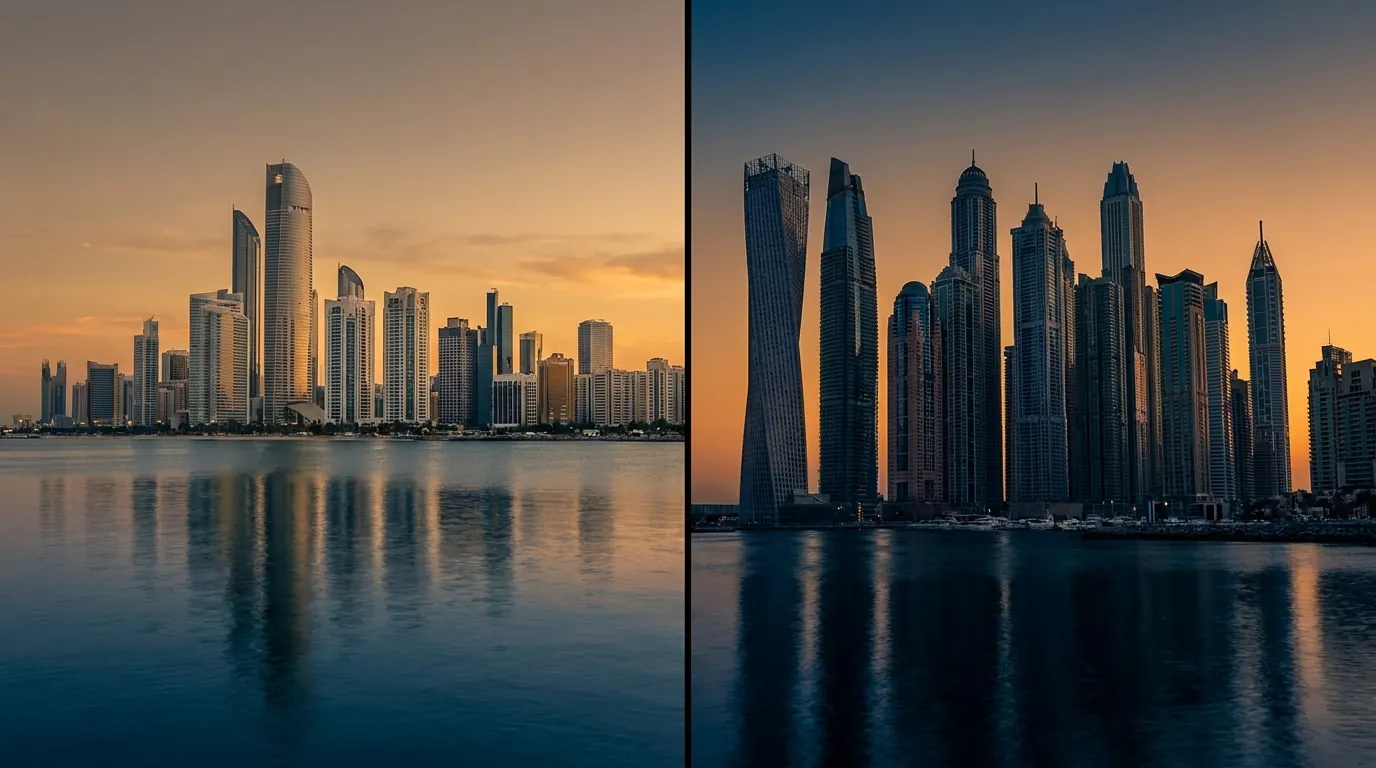
Most people who move to the UAE end up weighing the same two cities. Dubai is bigger, faster and more international. Abu Dhabi is calmer, greener and the seat of the federal capital. Neither is better in every way, and the right choice depends on your job, your family and the kind of weekday you want.
This guide compares them honestly across the things that matter in daily life. Figures are indicative as of 2026 and change often, so use them to compare, not to budget to the dirham.
The short version
| Abu Dhabi | Dubai | |
|---|---|---|
| Pace | Calmer, spread out | Fast, dense, always on |
| Rent | Generally lower for similar homes | Generally higher, wider range |
| Nightlife | Smaller, hotel-based | Larger and more varied |
| Culture | Louvre Abu Dhabi, Sheikh Zayed Grand Mosque | Alserkal Avenue, Dubai Opera, global events |
| Public transport | Buses, no metro | Metro, tram, buses |
| Job market | Government, energy, healthcare, finance | Tourism, trade, tech, media, finance |
| Tenancy registration | Tawtheeq | Ejari |
Cost of living
Housing is the biggest gap. For a comparable apartment or villa, Abu Dhabi rents are often lower than Dubai, although the best-located and newest Abu Dhabi areas such as Saadiyat Island have caught up in recent years. Everyday costs such as groceries, utilities, mobile plans and school fees are similar in both cities, and school fees are set by the emirate's education regulator (ADEK in Abu Dhabi, KHDA in Dubai).
Dining out and leisure tend to add up faster in Dubai simply because there is more of it. Use our cost of living tool to compare a budget in each city.
Housing: Abu Dhabi areas
- Saadiyat Island. The culture and beach district, with the Louvre Abu Dhabi, upscale villas, apartments and international schools such as Cranleigh Abu Dhabi. Expect premium rents, and a quiet, resort-like feel.
- Yas Island. Built around Yas Marina Circuit, theme parks and Yas Mall. Apartments and townhouses, strong for families and people who like leisure on the doorstep. Moderately priced and a short drive to the airport.
- Al Reem Island. A dense, high-rise island close to the city centre with apartments, a mall and waterfront walks. Popular with young professionals and couples, with a wide rent range depending on the tower.
- Khalifa City. A suburban residential area with villas, compounds and good value, near the airport and Raha International School. Best for families who want space and are happy to drive.
Typical annual rents as of 2026 vary widely by building, but think of roughly AED 70,000 to 130,000 for a two bedroom apartment in the mid-market Abu Dhabi areas, rising on Saadiyat, and AED 150,000 to 300,000 or more for family villas.
Housing: Dubai areas
Dubai offers a larger spread, from Dubai Marina and Downtown towers to villa communities such as Arabian Ranches and Dubai Hills Estate. A two bedroom apartment usually costs AED 85,000 to 210,000 depending on the area, and family villas range from about AED 150,000 to well above AED 400,000.
The honest summary: Dubai has more choice at every price point, but its popular areas are expensive, while Abu Dhabi offers somewhat better value for space.
Tawtheeq vs Ejari
Both emirates require your tenancy contract to be registered, but the systems differ.
- Ejari (Dubai). Run through the Dubai Land Department, Ejari registration is required for a valid tenancy. You need your Ejari number to connect DEWA, to sponsor family and to bring a dispute to the rental committee. Rent increases on renewal are governed by the Dubai rental index.
- Tawtheeq (Abu Dhabi). Run through the Department of Municipalities and Transport and applied for through TAMM, Tawtheeq registers the contract so that you can connect utilities, apply for residency for your family and use the rental dispute process. Your landlord normally starts the process.
In both cases, never pay a deposit or hand over cheques for a property whose landlord cannot show ownership documents. Our renting a home guide covers cheques, deposits and your rights in each emirate.
Schools
Both cities have a strong mix of British, American, Indian, IB and other curricula. Dubai has the larger number of schools and the more competitive admissions at the most popular ones. Abu Dhabi has fewer but well-regarded schools, often with more space and less competition for places in some areas. Ratings are published by KHDA in Dubai and ADEK in Abu Dhabi. Whichever you choose, apply early and read our schools and education guide.
Healthcare
Both emirates have excellent public and private care, and employers in both must provide health insurance for staff. Abu Dhabi's mandatory scheme is administered by the Department of Health, with Daman as the main basic plan provider. Dubai's is overseen by the Dubai Health Authority, with a minimum-benefit Essential Benefits Plan. Abu Dhabi has major hospitals such as Cleveland Clinic Abu Dhabi, while Dubai has Dubai Healthcare City and many private hospital groups. The practical difference is mostly distance and the network on your insurance card. See our healthcare and insurance guide.
Commute and transport
Dubai has a Metro and tram, which means living near a station can mean a car-light life. Traffic on Sheikh Zayed Road and Al Khail is heavy at peak times. Abu Dhabi has a bus network but no metro, so most residents drive, although distances inside the city are shorter and traffic is usually lighter.
If you work in one city and live in the other, remember the drive between Dubai and Abu Dhabi is around 90 minutes each way in normal traffic, and much longer at peak hours. Doing it daily is draining, so most people choose a home near work. Read our driving and transport guide for tolls (Salik in Dubai, Darb in Abu Dhabi) and parking rules.
Nightlife and culture
Dubai is the clear leader for nightlife, dining variety and big events, with a large licensed bar and club scene, beach clubs and concerts. Abu Dhabi's nightlife is quieter and mainly hotel-based, though Yas Island and Saadiyat have grown it, and the city is strong on culture, with the Louvre Abu Dhabi, the Sheikh Zayed Grand Mosque and Qasr Al Watan.
If you value green space and quiet weekends, Abu Dhabi may suit you. If you want options every evening, Dubai will.
Salaries and jobs
Pay in both cities is broadly comparable for the same role, and packages depend more on the employer than the emirate. Dubai has the bigger private sector, with strengths in tourism, aviation, trade, real estate, media and technology. Abu Dhabi leans towards government, energy, healthcare, sovereign investment and finance through Abu Dhabi Global Market. Check your offer's housing, schooling and transport allowances with our salary breakdown tool.
So which should you choose?
- Choose Abu Dhabi if you work in government, energy or healthcare, want space and calmer routines, or are a family looking for villa value.
- Choose Dubai if you want the widest job market, a lively social scene, a Metro and a huge range of homes.
- Consider both. Many families live in one and work in the other for a time, but it is a heavy commute.
Frequently asked questions
Is Abu Dhabi cheaper than Dubai?
For housing, usually yes, particularly for larger homes in areas such as Khalifa City. Other costs such as food, utilities and school fees are similar. Premium locations such as Saadiyat Island can be as expensive as top Dubai areas.
Is Abu Dhabi quieter than Dubai?
Yes. Abu Dhabi is less crowded, with fewer high-rise clusters, less traffic and a slower weekday rhythm. Dubai is busier and offers more nightlife, restaurants and events.
Can I live in Abu Dhabi and work in Dubai?
It is possible, but the drive takes about 90 minutes each way in good traffic. Most people find a daily commute tiring and choose a home closer to work.
What is the difference between Tawtheeq and Ejari?
Ejari is Dubai's tenancy contract registration system, run through the Dubai Land Department. Tawtheeq is Abu Dhabi's equivalent, run through the Department of Municipalities and Transport. Each is needed for utilities, family visas and rental disputes in its own emirate.
Written by Daleel UAE editorial team. Daleel UAE is a guide, not legal, financial or immigration advice. Rules change; confirm with the authority named before you act.